Look, I get the appeal. There’s a weird, masochistic romanticism to suffering. You convince yourself that sweating through six hours of dusty, vertical switchbacks makes the view “earned.” That if your quads aren’t trembling like a newborn deer, you haven’t really experienced the volcano.
I used to think that garbage too. Then I realized I could just… not.
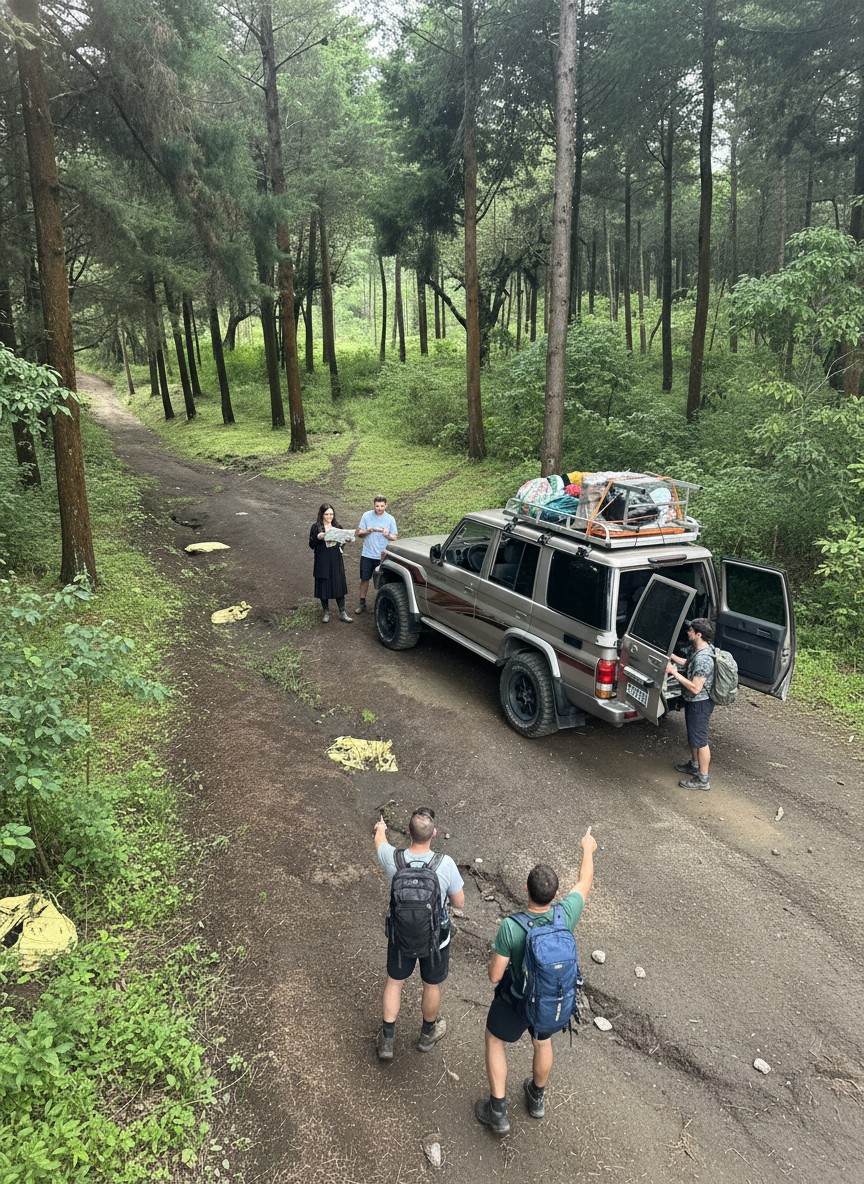
The Acatenango 4×4 tour is basically the cheat code for Guatemalan travel. It is for people who want that National Geographic moment without the “I’m going to vomit” cardio session. You aren’t “cheating” the mountain—you’re negotiating better terms. Instead of trudging up through cornfields and cloud forest for five grueling hours, you’re bouncing in the back of a Land Cruiser, watching hikers wipe grime off their faces as you zoom past. It feels a little smug. Honestly? It feels fantastic.
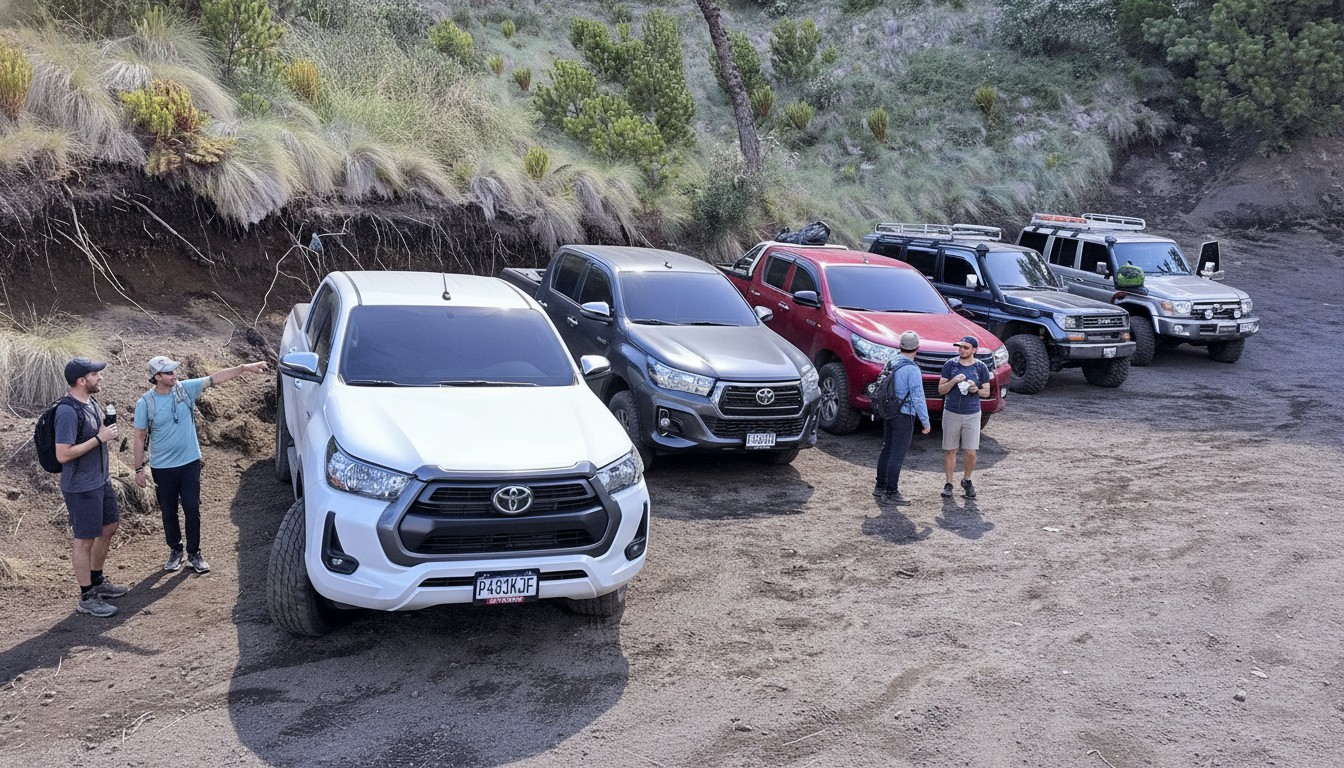
This option isn’t just for the lazy (though, same). It’s for photographers hauling heavy glass, older travelers with the spirit but maybe not the knees, or anyone saving their energy for the optional—and brutal—Fuego ridge hike later that night.
The Science of the Boom: Why Fuego Explodes
Before we get into the logistics, it helps to know what you are staring at, because the geology here is nuts.
Acatenango and Volcán de Fuego aren’t just neighbors. They are siblings—connected by a deep, subterranean bond. They form a “paired volcano” system and share the same magma chamber. Think of them like a pressure cooker with two valves.
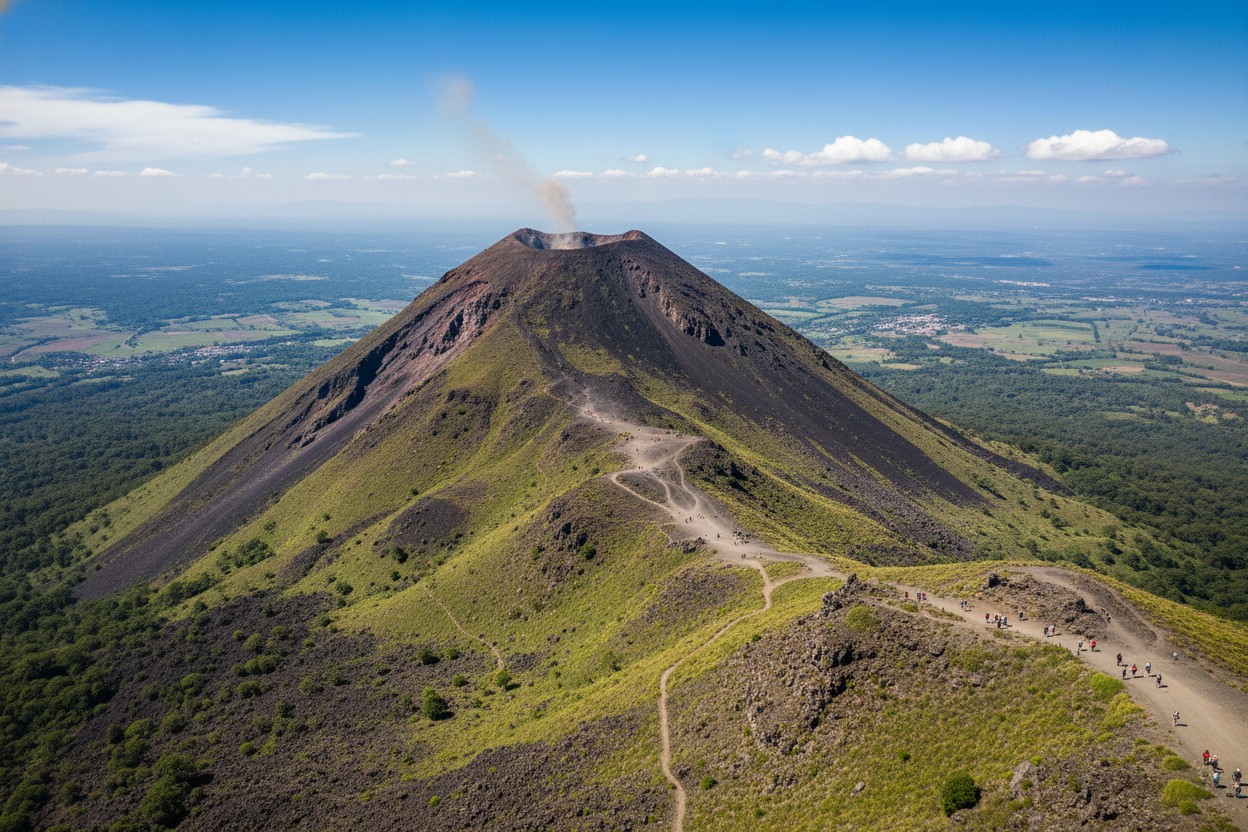
Acatenango (the one you sleep on) is the older, dormant valve. It hasn’t thrown a tantrum since 1972. Fuego (the angry one) is an open vent. It acts as a pressure release for the whole system, spewing gas, ash, and lava almost constantly—sometimes every 15 minutes. Geologists call these “Strombolian eruptions.” You’ll call them the best fireworks show on earth. Because Fuego is constantly letting off steam, it keeps Acatenango safe enough for you to sleep on its shoulder.
Acatenango Jeep Tour vs. Traditional Trekking: Difficulty and Comparison
Let’s break this down because “easier” doesn’t mean “effortless.”
The Traditional Trek:
It’s a beast. You start around 2,400 meters and climb to 3,600 meters just to reach camp. The trail is relentless. Steep, covered in loose volcanic soil—scree—that creates a “two steps up, one step slide back” rhythm. If you aren’t acclimatized, it can wreck you.
The 4×4 Option:
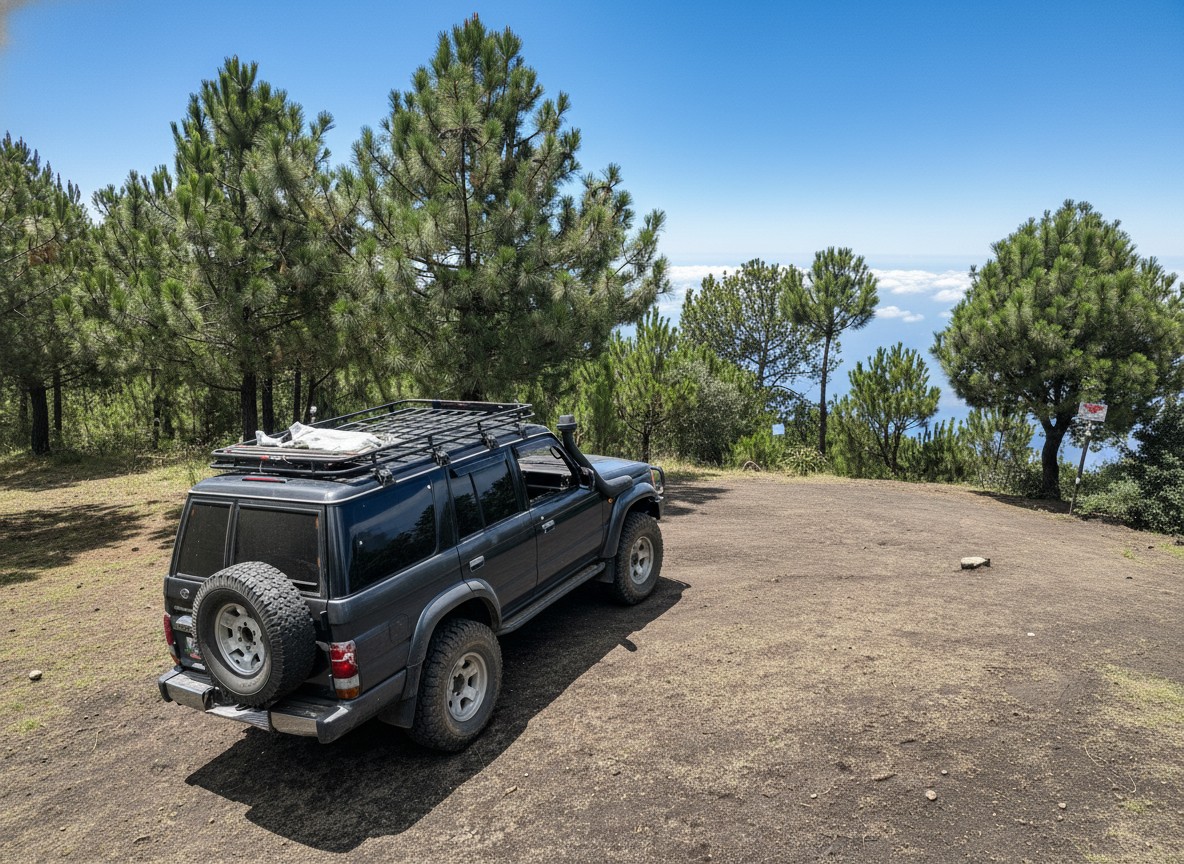
You skip the first 3-4 hours of the slog. The jeep takes you up a private farm road—bumpy as hell, grab the roll bar—straight to a drop-off point around 3,400 or 3,500 meters.
Does this mean zero hiking? No.
You still have to hike the final stretch to base camp. It’s usually about 45 minutes to an hour. And guess what? You are at high altitude. The air is thin. You will still be gasping, and your heart will thump like a techno drum track. But compared to the full trek, it’s a walk in the park. A very high, cold, breathless park.
Detailed Itinerary: From Antigua Pickup to the 4×4 Trailhead
Most tours run on a similar schedule, though the vibe varies from “crammed into a truck bed” to “luxury private driver.”
1. The Pickup (Late Morning):
You don’t have to wake up at 4 AM. Bliss. Pickups are usually between 8:00 AM and 11:00 AM. You’ll grab coffee in Antigua, maybe panic-buy some extra snacks at the bodega.
2. The Drive:
It’s about an hour drive out of Antigua to the base. The scenery shifts from colonial cobblestones to dusty agricultural towns. Eventually, you hit a private gate near the village of La Soledad. This is where the hikers get out and start walking. You? You stay in the car.
3. The Off-Road Ascent:
This is where it gets gnarly. The road is steep, rutted, and winding. If you get motion sickness, pop a Dramamine beforehand. You cut through different ecosystems—farmland, then dense cloud forest, then high alpine pine. It takes about an hour of aggressive driving to reach the drop-off point.
Not Just Rocks: The Cloud Forest Ecosystem
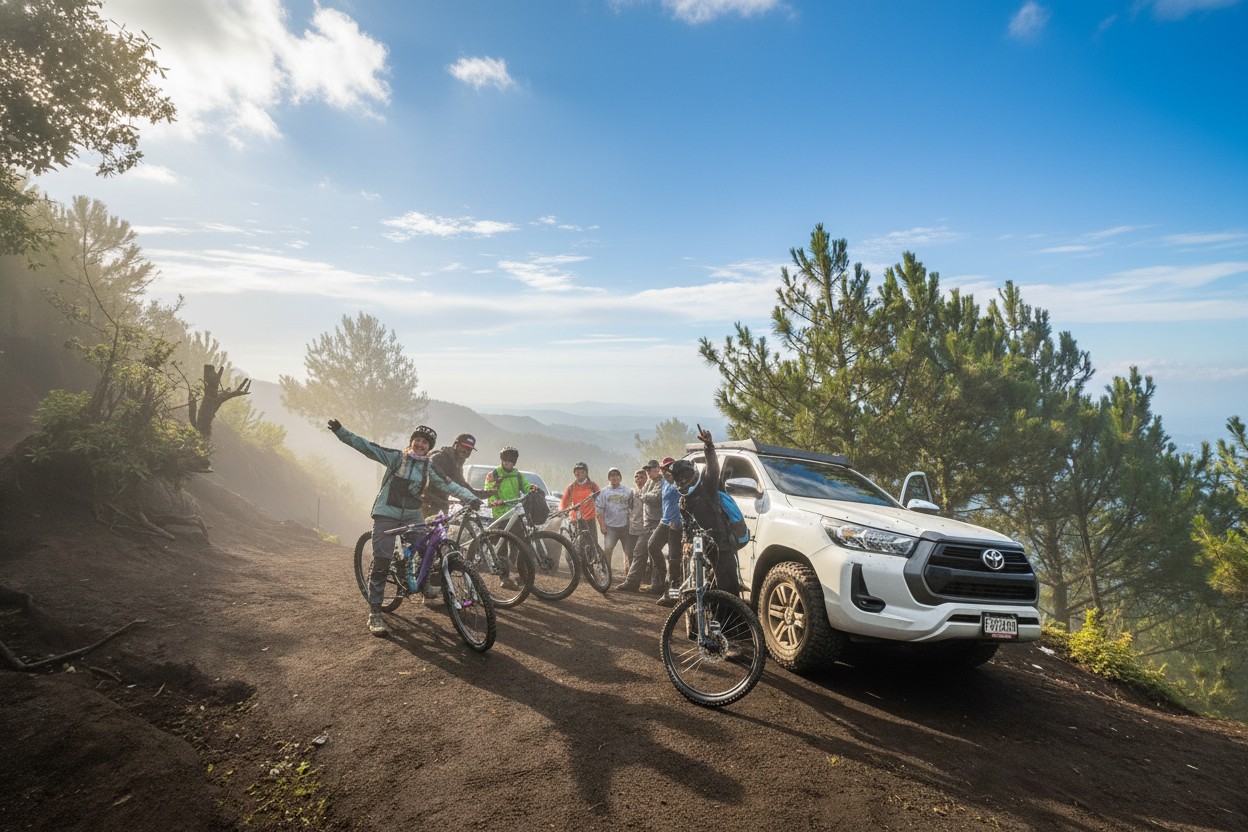
Since you aren’t fighting for oxygen, you can actually pay attention to the nature. The drive up cuts through distinct bio-zones that are surprisingly lush.
- The Cloud Forest: As the jeep climbs, you pass through a misty, moss-covered belt. Look for bromeliads—air plants—clinging to the massive oak and cypress trees.
- The Wildlife: It’s rare to spot them because of the engine noise, but this mountain is home to coatis (locally called pizotes—they look like a raccoon crossed with a monkey), toucanets, and even elusive wildcats.
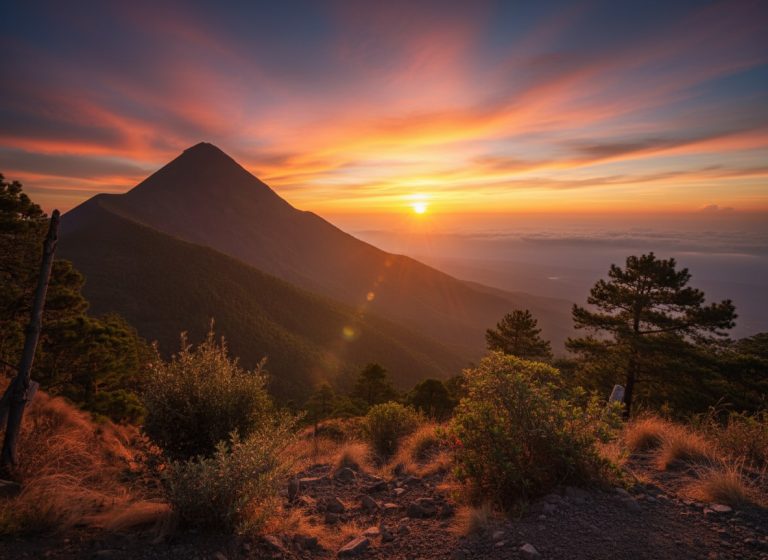
- The Alpine Zone: As you near the drop-off, the lush jungle gives way to high-altitude pine and volcanic sand. The trees get scraggly and sparse, which is great because it opens up the view.
The “Easy” Hike: What to Expect on the Final Ascent to Base Camp
The jeep stops. You hop out. The temperature has dropped—significantly.
The drop-off point is usually a flat clearing called “El Tonel” or similar, depending on which tour operator you use (CA Travelers, Old Town Outfitters, and Mayan Outdoors all have different spots).
The hike to camp is short but deceptive.
It’s “Guatemalan flat”—which means it’s definitely not flat. You traverse the side of the volcano. The path is narrow, cutting through high-altitude brush and wildflowers. Because you haven’t been hiking for hours, your legs are fresh. Your lungs, though? They will be confused.
Take it slow. Stop for photos. The guide isn’t in a rush. You’ll likely reach base camp in under an hour, feeling fresh enough to actually enjoy the arrival rather than collapsing into a heap.
Base Camp Life: Glamping Cabins, Tents, and Meals at 3,600 Meters
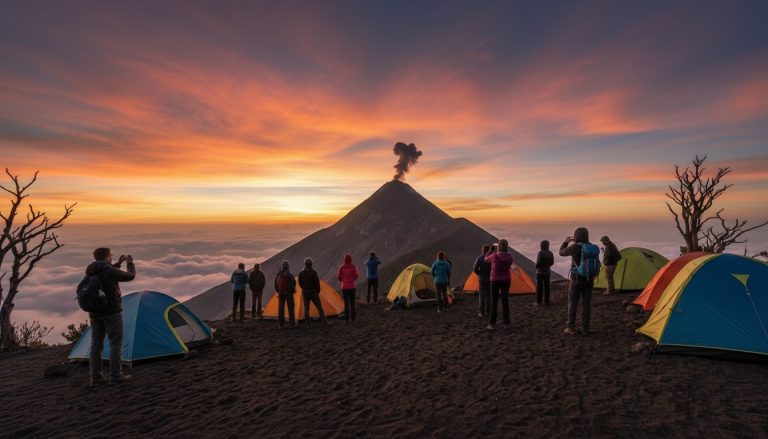
Base camp is a weird little village clinging to the side of a sleeping giant. It’s a mix of ragged tents and surprisingly nice A-frame cabins.
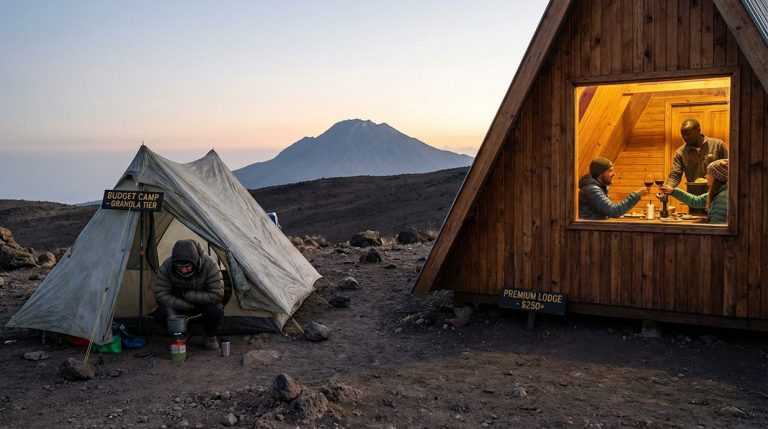
If you booked a standard 4×4 tour, you might be in a high-quality tent. If you splurged—and on a jeep tour, you probably did—you’re likely in a wooden cabin. Some of these are legit. Glass fronts, wood-burning stoves, actual mattresses. It’s “glamping,” sure, but remember: there’s no plumbing. The toilet is a hole in the ground or a composting situation down a path.
The Food Situation:
Dinner is usually hearty. Pasta, beans, chicken, hot chocolate. It tastes 500% better than it would at sea level because you’re freezing. You huddle around a campfire—some camps have a communal fire pit—swapping stories with people who hiked the whole way up. Try not to look too well-rested.
How to Photograph the Lava (Without Ruining Your Shot)
You didn’t come all this way to take a blurry iPhone photo. Capturing an erupting volcano at night is tricky, but doable if you know the settings.
- Bring a Tripod: This is non-negotiable. You cannot hand-hold a 15-second exposure. If you don’t have one, bring a small “GorillaPod” or find a very stable rock.
- The Settings (The Cheat Sheet):
- Mode: Manual (M).
- Focus: Manual Focus. Set it to infinity (∞) or use “focus peaking” on the stars. Do not trust auto-focus in the dark.
- Aperture: As wide as possible (f/2.8 or f/4).
- ISO: Start at 1600 or 3200.
- Shutter Speed: 10 to 20 seconds. Any longer and the stars will trail; any shorter and you won’t get enough lava detail.
- The “Blue Hour” Hack: The best photos aren’t taken in pitch black. They are taken about 45 minutes after sunset (Blue Hour). You get the red lava, but you can still see the silhouette of the volcano against a deep blue sky.
The Main Event: Watching Volcán Fuego Erupt from Your Campfire
This is why you are here.
Volcán Fuego is Acatenango’s angry neighbor, and it is active.
You don’t just see it; you hear it. It starts with a rumble, like a jet engine starting up inside the earth. Then—BOOM.
Lava fountains shoot into the sky. Molten rocks tumble down the cone, glowing angry red against the black slopes.
It happens every 15 to 20 minutes. Sometimes it’s a puff of smoke. Sometimes it’s a violent explosion that shakes the ground under your boots. Sitting there, wrapped in blankets, sipping cheap wine or hot cocoa while a mountain explodes in front of you? It changes your brain chemistry. It’s primal.
Optional Adventures: The Fuego Night Hike and Summit Sunrise Climb
Just because you took the jeep up doesn’t mean you can’t wreck yourself later. You have two chances to sweat.
1. The Fuego Night Hike (The Widowmaker):
After dinner, guides will ask who wants to hike onto the ridge of the erupting volcano.
Do not underestimate this.
You have to hike down from Acatenango base camp, losing all that precious elevation, cross the saddle, and hike up Fuego’s knife-edge ridge. You get insanely close to the eruptions. It is terrifying. And beautiful.
Then you have to hike back. Uphill. In the dark. At 3,700 meters.
It costs extra (usually ~200 Quetzales), and it is physically harder than the standard Acatenango hike.
2. The Sunrise Summit:
Around 4:00 AM, they wake you up. You can hike to the absolute peak of Acatenango (3,976m) for sunrise.
This takes about 1.5 hours. It is steep. It is freezing. The wind can knock you over.
The terrain is pure volcanic sand—sink, step, sink, step.
Is it worth it? Yes. The view of the sun rising over the line of volcanoes (Agua, Fuego, Pacaya) is unmatched. But if you’re cozy in your cabin and Fuego is erupting right outside your window… honestly? staying in bed is a valid choice.
Essential Packing List for Your Acatenango Jeep Adventure
You aren’t hiking the whole way, but you can still get hypothermia. The weather up there doesn’t care how you arrived.
- The “I am not freezing to death” layer: Puffer jacket. A good one.
- Headlamp: Flashlights on phones don’t cut it.
- Hiking Boots: Sneakers are a bad idea. You need grip for the scree.
- Buff/Scarf: The wind is dusty and cold. Protect your face.
- Water: 3-4 liters. You dehydrate fast at altitude.
- Cash: For the guides (tips are appreciated, usually 10%), optional hikes, or renting a walking stick.
- Earplugs: The volcano is loud. Your tent neighbors might be louder.
- Portable Charger: Cold batteries die instantly. Keep your phone warm in your sleeping bag.
Best Time to Visit: Weather, Seasons, and Visibility Guide
Guatemala has two seasons: Dry and Wet.
November to April (Dry Season):
This is the golden window. Clear skies, crisp views, freezing nights. January and February are the coldest but offer the best visibility. You want this.
May to October (Wet Season):
It rains. A lot.
You might get lucky and have a clear morning, but you risk being stuck in a cloud at base camp, freezing wet, staring at a gray wall of fog while hearing explosions you can’t see.
The jeep trail can also get muddy and sketchy. If you go in wet season, prepare for disappointment (and bring extra socks).
Safety Tips: Handling Altitude Sickness and Cold Temperatures
Altitude sickness is the great equalizer. It hits marathon runners and couch potatoes alike.
The Symptoms: Headache, nausea, dizziness, insomnia.
The Fix:
- Acclimatize: Spend at least 48 hours in Antigua (1,500m) before going up.
- Hydrate: Drink water until you are annoyed by how often you have to pee.
- Local Remedy: Many locals swear by Chlorophyll drops (Clorofila), which you can buy at any pharmacy in Antigua. It supposedly helps oxygenate the blood.
- Meds: Acetazolamide (Diamox) works, but you need a prescription. Ibuprofen helps the headache.
- Don’t be a hero: If you feel truly awful, tell the guide. The only cure is going down.
The Cold:
It can drop to -5°C (23°F) with wind chill. Don’t rely on the rental gear being perfect. Layer up. Wear your beanie to sleep.
The Morning After: Where to Recover in Antigua
Once the jeep rattles you back down to civilization, you are going to be dusty, tired, and starving. Here is your recovery game plan:
- The Shower: You will have volcanic dust in places you didn’t know existed. Scrub hard.
- The Coffee: Go to Café Boheme or Fernando’s Kaffee. You need strong, Guatemalan coffee to wake up from the altitude haze.
- The Meal: You burned a lot of calories shivering. Head to Caoba Farms for a massive farm-to-table feast, or grab a burger at Pappy’s BBQ.
- The Body: If your legs are sore (even from the short hike), book a massage. There are countless spas in Antigua catering specifically to post-volcano hikers.
Is the Acatenango Jeep Tour Worth the Cost? Final Verdict
A traditional hike costs maybe $50-$80.
The jeep tour runs anywhere from $150 to $450 depending on the “luxury” level.
Is it worth 3x the price?
If you are fit, broke, and love type-2 fun, stick to the hike. The camaraderie of the struggle is real.
But if you are short on time, worried about your knees, or just want the best part of the experience without the worst part?
Absolutely.
You get the same sunset, the same eruptions, and the same marshmallow-roasting glory. You just get to enjoy them without wanting to amputate your own legs.
It’s the ultimate travel hack. Pay the money. Take the jeep. Thank me later when you’re sipping hot cocoa watching lava explode while the hikers limp into camp.