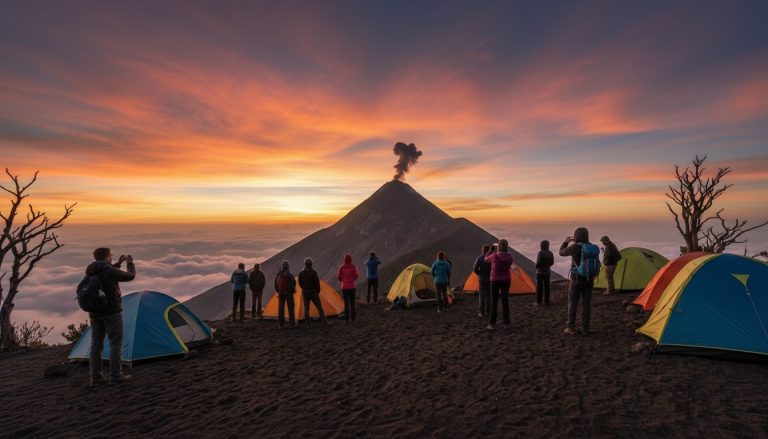
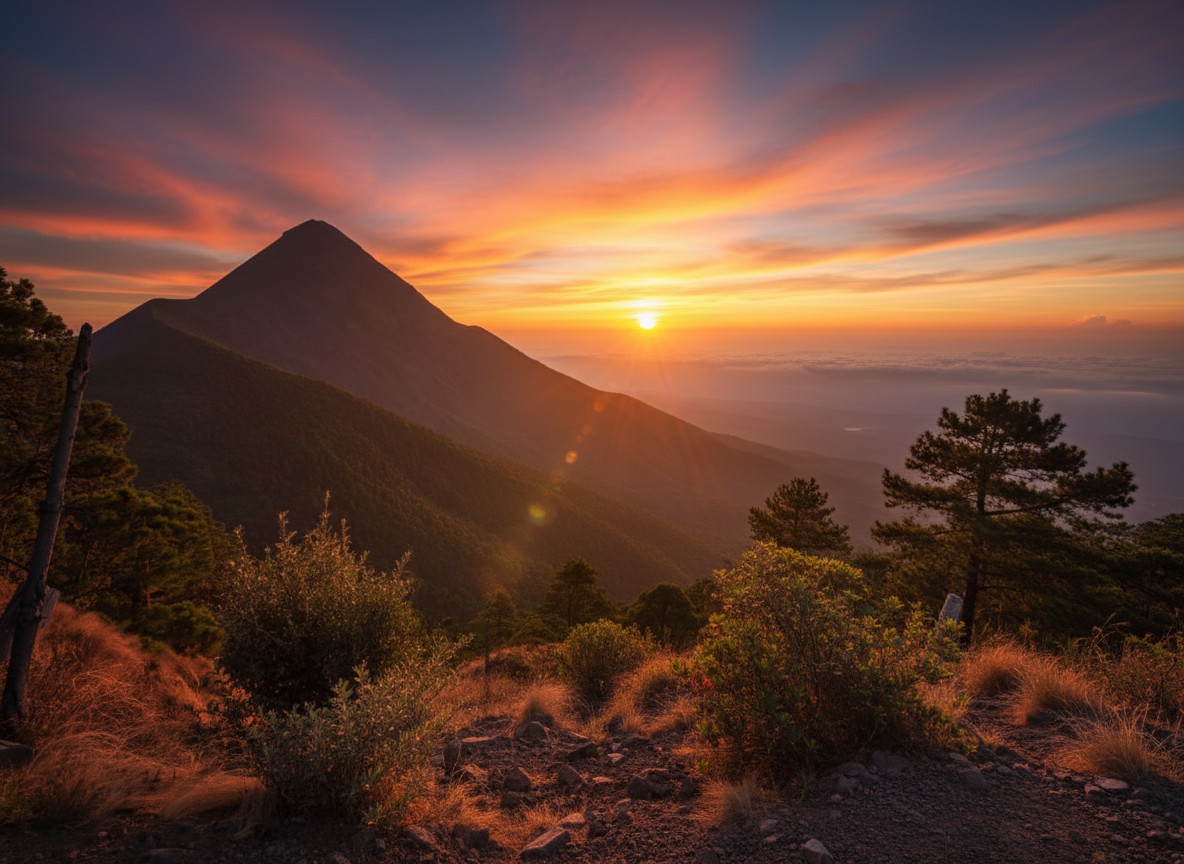
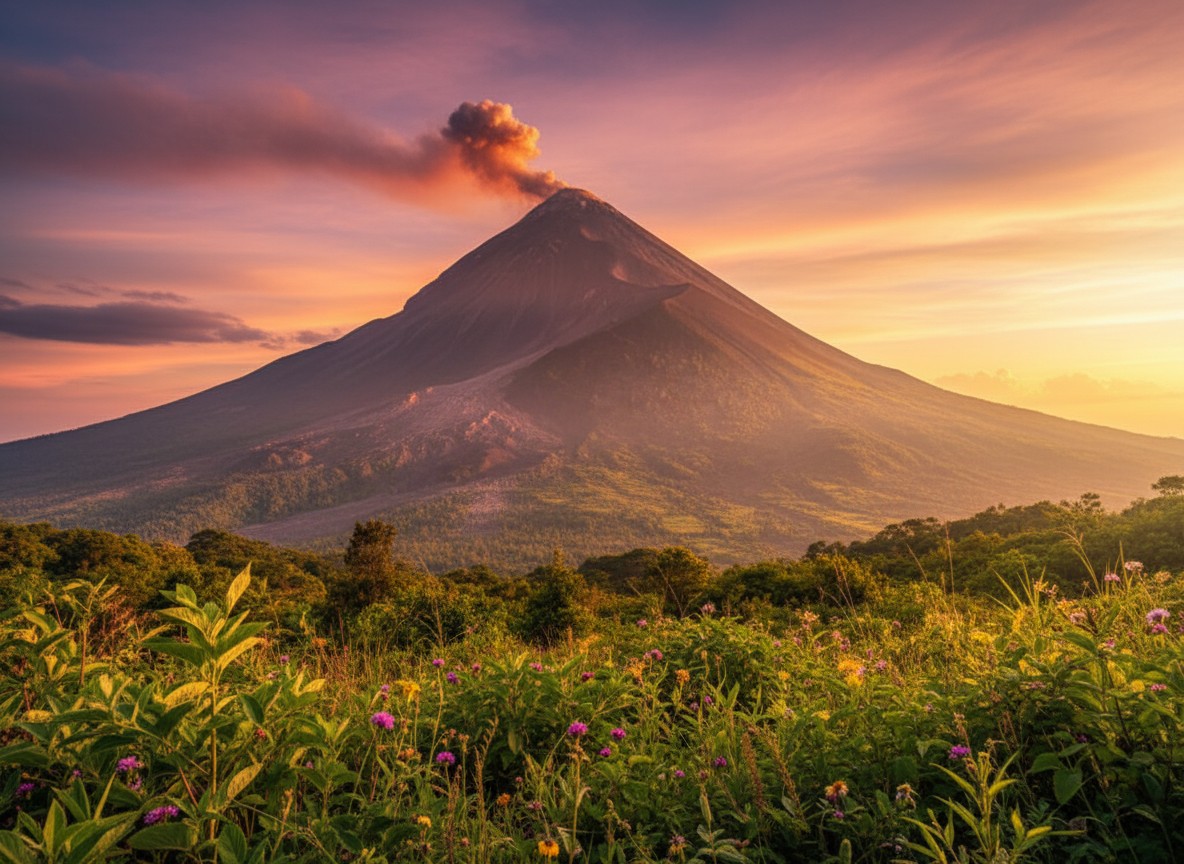
Let’s be real. You aren’t dragging yourself up Acatenango for Acatenango. No way. You’re doing it for the nosebleed seats to the apocalypse next door—Volcán de Fuego. Acatenango is just the silent, dormant pile of rock you stand on; Fuego is the screaming neighbor that hasn’t slept in 500 years.
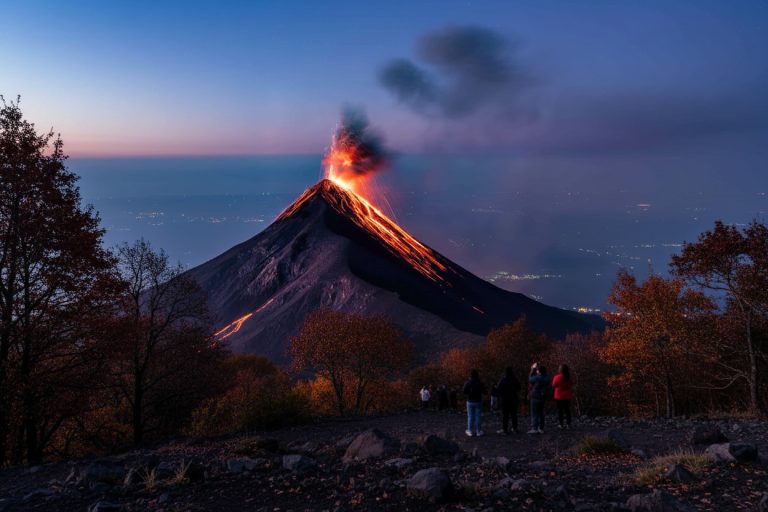
You’re up there. Shivering. Freezing, actually. Then Fuego lets out a boom that rattles your chest cavity… it changes you. Seeing lava spout into the black sky like a devil’s fountain is visceral. Primal stuff. It is arguably the only time you’ll be eye-level with an erupting disaster without dying. The view isn’t just “nice.” It’s violent. Beautiful. Totally worth the lung-busting misery to get there.
The Sleeping Beast: A Quick Geology Lesson
Know what you are standing on before you go. Acatenango isn’t just dirt; it’s a stratovolcano towering at 3,976 meters (13,044 ft). Third highest in Central America. Big.
Fuego gets the likes on Instagram, but Acatenango has a past. Last erupted in 1972. Technically “dormant,” not dead. There’s a difference. A ridge called La Horqueta connects them. When you hike, you are walking the spine between a sleeping giant and an active monster.
The Best Time to Hike: Dry Season vs. Wet Season
Guatemala has two settings. Dust bowl or mud bath.
Dry season runs November to April. Go then if you want to actually see the volcano. Crisp skies, stars, high odds of a clear sunrise. But—crowded. Insanely crowded. And dusty. You will be blowing black snot out of your nose for three days.
Then there’s the wet season (May to October). Locals call it “winter.” Rain. Lots of it. Trails turn into slip-and-slides. There is a solid chance you hike six hours to stare at a grey wall of fog. Miserable? Probably. But mornings are often clear, everything is emerald green, and you won’t fight 500 backpackers for a tent spot. It’s a gamble. High risk.
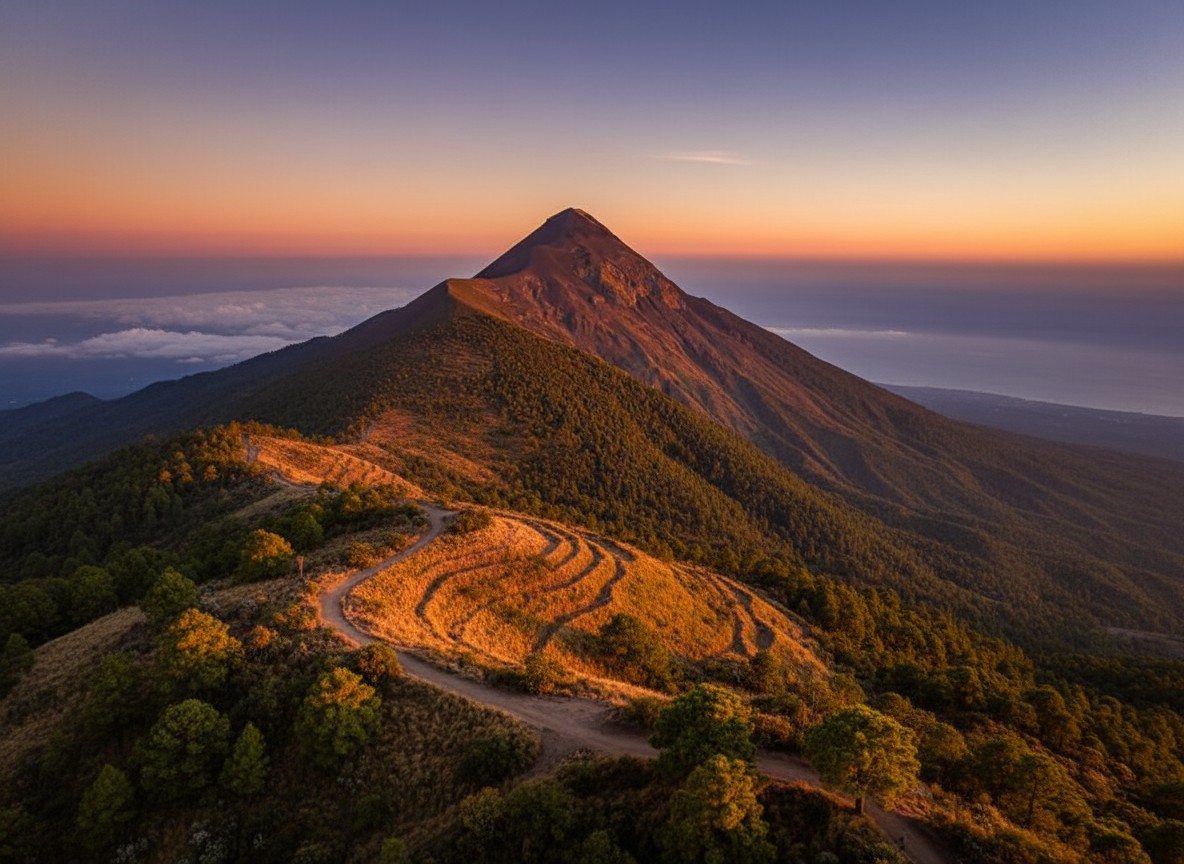
Month-by-Month Weather and Visibility Breakdown
I’ll break it down. No guessing.
- November – January: Peak times. Cold as hell at the top. I mean freezing. Visibility though? Unbeatable. You can see the Pacific coast.
- February – April: Getting warmer. Still dry. Haze starts creeping in—farmers burning fields in the valleys—but Fuego views remain solid.
- May – June: Rain starts kicking in. Mornings might be nice, afternoons are usually a washout.
- July – August: A weird phenomenon called the canícula happens—a mini dry spell in the middle of rainy season. Catch it, you’re golden. Miss it… enjoy the soak.
- September – October: The worst rain. Seriously, don’t bother unless you love suffering. Trails are treacherous mud pits.
The Cost of Glory: Budgeting for Your Hike
Views are priceless, logistics aren’t. Here is the cash you need (prices change, obviously):
- Park Entrance Fee: ~Q110 ($14 USD). Rarely included in tours.
- Porter (One Way): Q150 – Q200 ($20-$26 USD).
- Walking Stick Rental: Q5 – Q10 ($1 USD).
- Guide Tips: Q50 – Q100 ($7-$13 USD). Don’t be stingy—these guys haul gear up a volcano daily.
- Fuego Add-On: Q200 – Q250 ($25-$32 USD).
Understanding the Difficulty: Elevation Gain and Terrain
Social media makes this look easy. It’s not.
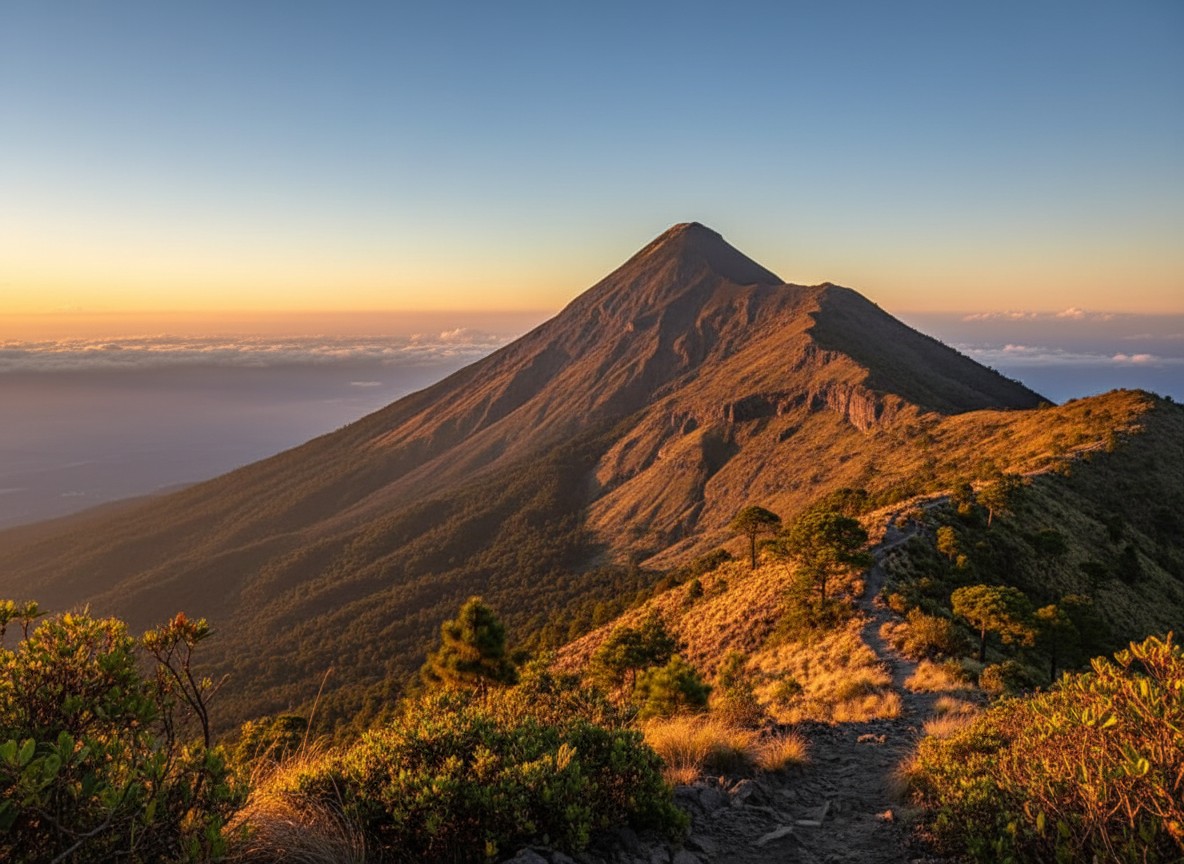
You start around 2,400 meters (7,900 ft) and drag yourself to nearly 4,000 meters (13,000 ft). A vertical gain of over a mile. The trail isn’t a path; it’s loose volcanic scree. Imagine walking up a steep sand dune for five hours. Take two steps up, slide one back. Demoralizing.
First hour is the “widow-maker”—steep, hot, dusty farmland. Then the cloud forest. Nicer but relentlessly uphill. By the time you hit base camp, legs feel like jelly. And if you’re crazy enough to do the extra hike to Fuego’s ridge? Pure mental grit.
Rent a Lung: Why You Should Hire a Porter
No shame in this game. At the trailhead in La Soledad, locals with horses wait. Porters. For Q150-Q200 ($20-$25 USD), they carry your heavy pack (up to ~25-30lbs) to base camp.
Do it. Seriously. Unless you are an ultra-marathoner or a masochist, hiring a porter changes the hike from a death march into something enjoyable. You directly support local families too. Best money you will spend in Guatemala.
Acclimatization Strategies to Prevent Altitude Sickness
Altitude sickness strikes randomly. Doesn’t care if you’re fit. Acatenango is high enough to give you a pounding headache, nausea, dizziness.
- Don’t rush it: Spend 48 hours in Antigua (1,500m) before you even look at the volcano.
- Hydrate aggressively: Drink 3-4 liters the day before. Drown yourself.
- Skip the booze: I know, Antigua has great bars. Save the celebratory mezcal for after.
- Pills: Some swear by Diamox. I just tough it out with ibuprofen. Prone to sickness? Talk to a doctor.
If you feel like you’re going to pass out—stop. Tell your guide. Don’t be a hero.
Day Hike vs. Overnight Camping: Why the Night Stay is Worth It
I don’t get why people do the day hike. Sounds like torture with zero payoff. Rush up, maybe see smoke, rush down.
You have to stay overnight. Have to. The magic of Fuego happens after sunset. Day eruptions look like grey puffs of ash—boring. At night? Glowing red lava rivers. Exploding boulders. Fireworks. Watching the sunrise from the summit, seeing the volcano’s shadow stretch across the land… that’s the money shot. Sleep in a tent. Freeze your butt off. It’s part of the experience.
The Fuego “Double Whammy”: The Hike Within the Hike
Reach base camp, drop bags, catch breath. Then the guide offers the “Fuego Add-on.” An extra hike off Acatenango, down into the saddle, up onto the ridge of the erupting Volcán de Fuego itself.
- The Cost: Usually an extra Q200 cash.
- The Reality: Brutal. You hiked 5 hours. Now hike down 300 meters, cross a narrow ridge, hike up steep, slippery slate in the dark.
- The Reward: Standing 500 meters from the crater. Feel the heat. Hear rocks tumbling. Terrifying and exhilarating.
- The Verdict: If you have energy, do it. Once-in-a-lifetime. But—the hike back up to camp afterwards is the hardest physical thing you will do all weekend.
Getting to the Trailhead: The Road to La Soledad
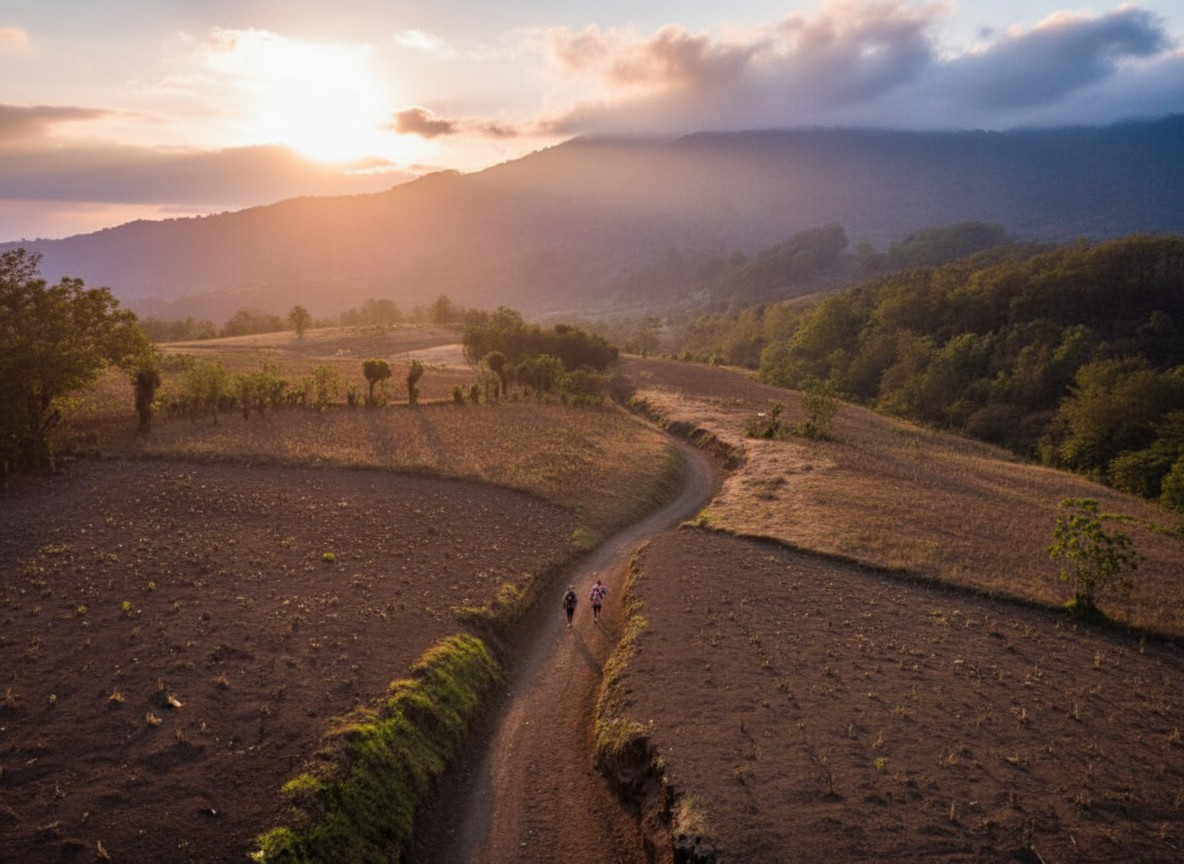
Most people book a tour with a shuttle. If you go independent, the trailhead is in La Soledad. Tiny village. An hour from Antigua.
- Shuttle: Easiest. Included in 99% of tours.
- Uber: You can Uber to La Soledad for Q150-Q200. Good luck getting one to come back.
- Chicken Bus: For the adventurous and broke. Bus from Antigua terminal to Parramos, transfer to one heading to Yepocapa. Tell the driver “La Soledad.” Cost: ~Q20. Time: 2+ hours and lots of confusion.
Essential Packing List: Surviving Freezing Summit Temperatures
Baffling how many people show up in shorts. At the summit, it can be -5°C (23°F) with wind chill.
- Headlamp: Non-negotiable. You hike in the dark. Phone flashlight won’t cut it.
- Layers on layers: Thermal base, fleece mid, puffy down jacket, windproof shell. Need them all.
- Gloves and Hat: Fingers go numb without them.
- Buff/Scarf: Dust is relentless. Protect your lungs.
- 4 Liters of Water: No water on the mountain. You carry what you drink.
- Snacks: Comfort food. Chocolate, nuts, gummy bears. You burn 3,000 calories; eat whatever.
- Cash: Entrance fee, tips, inevitable walking stick rental (get the stick).
- Toilet Paper & Hand Sanitizer: No bathrooms. Just nature.
The Unspoken Reality: Bathrooms on the Mountain
Let’s manage expectations. “Base Camp” usually has an outhouse. A hole in the ground surrounded by plywood. By end of season, it smells exactly how you think. Hiking between camps? You use “the bush.” Pack out your trash, please.
Choosing the Right Tour Operator for Your Trek
Not all tours are equal. Some are backpacker parties; others are expeditions.
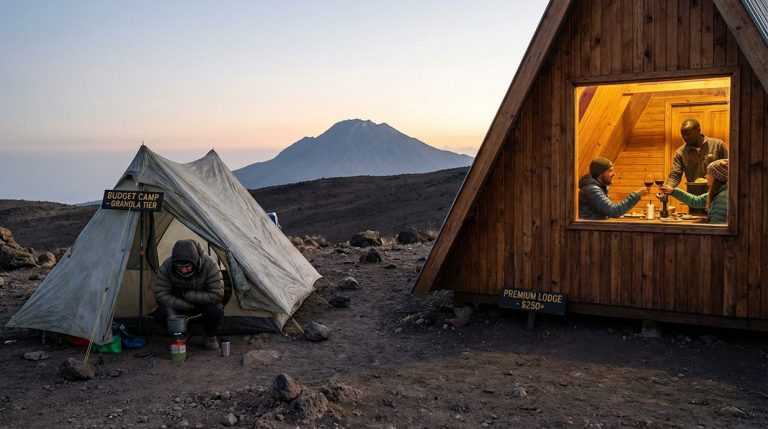
- Wicho & Charlie’s: Popular kids. Great cabins, vegan food, huge groups. Feels like a frat party, but they run a tight ship.
- OX Expeditions: The pros. Expensive. Smaller groups, better guides. Like a real mountaineering expedition.
- Tropicana Hostel: Budget option. Cheap, cheerful, crowds. You get what you pay for—expect older gear and hungover backpackers.
- Soy Tours: Local guides, home-cooked food. Authentic vibe if you want to support the community directly.
Going Solo: Can You? Yes. Should You? Probably Not.
Technically, you don’t need a guide. Show up, pay the fee, walk up.
- The Pros: Save money. Hike at your own pace.
- The Cons: Carry 100% of your gear (tent, bag, food). Trail has forks where people get lost. Safety issues (robberies happened in the past, rare now).
- The Verdict: Unless you are an experienced mountaineer with gear, book the tour. Logistics of hauling a tent to Guatemala aren’t worth the $40 savings.
Safety Tips for Hiking Near an Active Volcano
Sounds obvious but—it’s an active volcano.
Stay on marked trails. Fuego throws rocks the size of cars. People have died getting too close. If the guide says “stop,” stop.
Cold is the silent killer. Hypothermia is a real risk if you get wet. Keep sleeping clothes dry at all costs. Put them in a plastic bag inside your pack. If it rains and your dry clothes get wet? You’re in for a dangerous night.
Photography Guide: Capturing Fuego’s Eruptions at Night
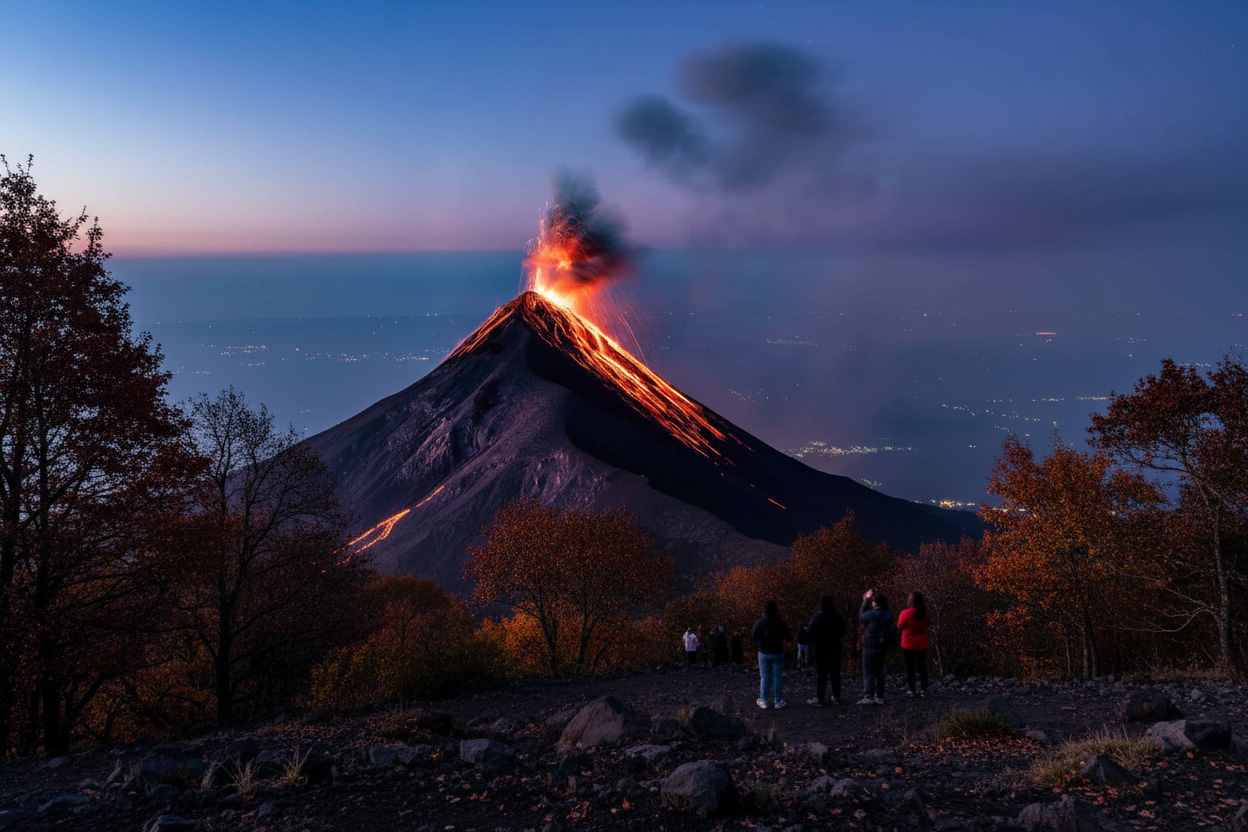
You want the shot of red lava against stars. Here’s how without fumbling in the dark.
- Tripod: Essential. Cannot handhold a 15-second exposure.
- Settings:
- Aperture: Wide open (f/2.8 or lower).
- ISO: Crank it (1600 – 3200).
- Shutter Speed: 10-20 seconds. If eruption is bright, drop to 5-8 seconds for detail.
- Focus: Manual focus. Zoom on a star or city lights for infinity. Tape the lens ring so you don’t bump it.
- Patience: Erupts every 15-20 minutes. Set up, wait, hit shutter when you hear the rumble.
The Aftermath: Recovery in Antigua
Congrats, you survived. Back in Antigua now. You smell terrible. Legs don’t work. Recovery protocol:
- The Shower: Volcanic dust is in places you didn’t know existed. Scrub hard.
- The Massage: Antigua is full of spas offering “Hiker Massages.” They know which muscles hurt. Costs about Q250 ($30). Essential if you want to walk tomorrow.
- The Meal: Go to McDonald’s. Serious. Antigua McDonald’s has the most beautiful courtyard in the world. A Big Mac never tasted as good as it does after burning 4,000 calories. Want a beer? Head to The Snug—where hikers swap war stories.
Final Preparation Checklist Before You Climb
- Trim your toenails. Seriously. The descent destroys toes if you don’t.
- Download offline maps. Reception is spotty.
- Charge everything. Power banks are heavy but necessary. Cold drains batteries.
- Poop before you go. “Toilets” at base camp are… an experience. Avoid if possible.
- Mental check. It’s going to hurt. You’ll be tired, dirty, cold. Embrace the suck. View is worth it.