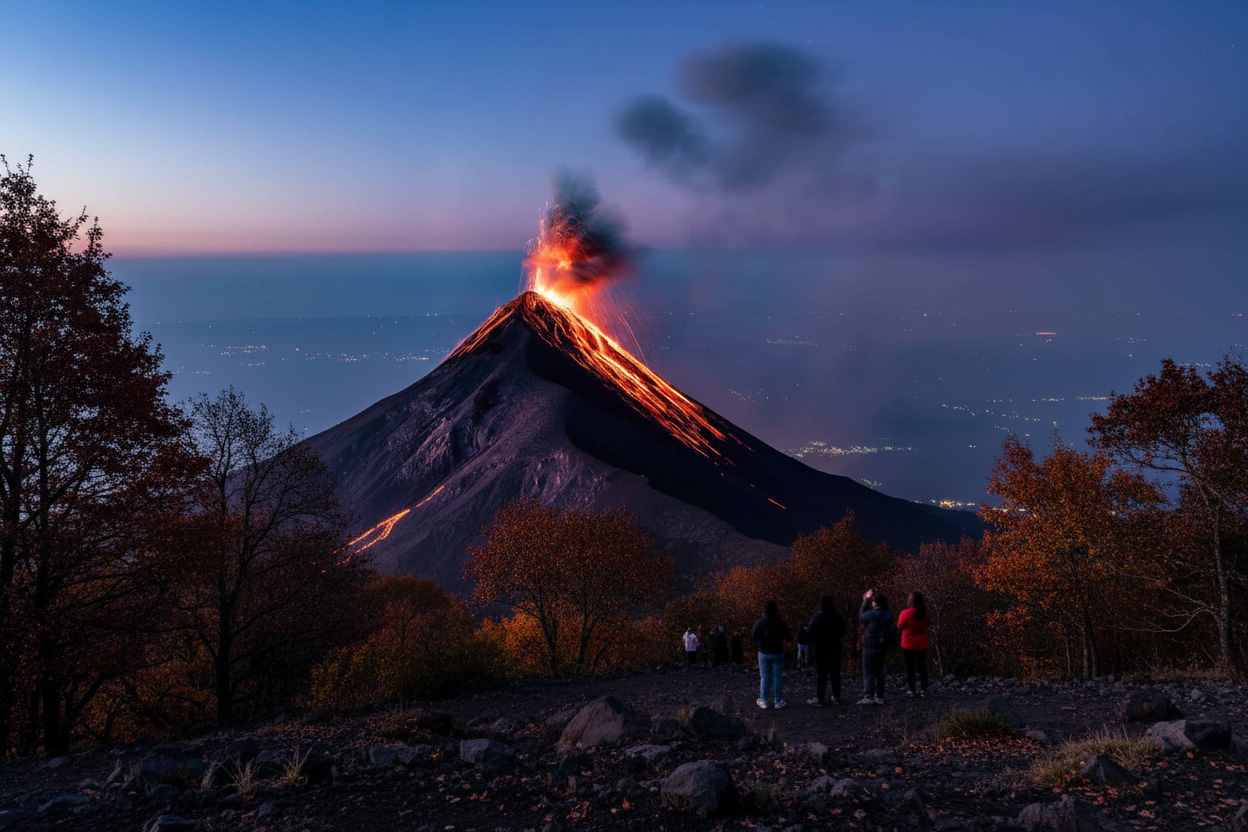
Most “bucket list” items are trash. You stand in line for hours to stare at a painting you’ve seen on Instagram or pay fifty bucks for a drink with a view of a smoggy skyline. I hate that stuff. But Acatenango? It’s different. It’s raw… maybe even a little dangerous.
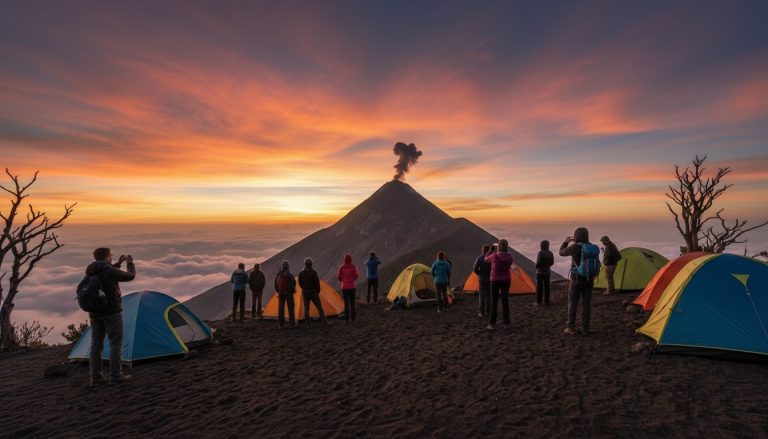
You aren’t just hiking a mountain; you are sleeping next to a violent, exploding neighbor. Volcán de Fuego goes off every 15 to 20 minutes, spitting lava bombs into the sky like an angry god throwing a tantrum. And you’re just there. Watching it. Sitting at 3,600 meters, freezing your toes off, sipping bad hot chocolate while the ground shakes beneath you. It’s terrifying. It’s beautiful. It is absolutely worth the misery.
The Tale of Two Giants: A Quick Geological History
Before you lace up, you should know what you’re standing on. Acatenango and Fuego aren’t just neighbors – they are joined at the hip in a volcanic complex called La Horqueta.
Think of them as siblings with totally different vibes. Acatenango is the old, dormant brother. He hasn’t had an outburst since 1972. Tall (3,976m), stable, lets you sleep on his shoulder. Fuego, on the other hand, is the hyperactive, rebellious kid. He has been erupting basically constantly since 1524.
When you hike Acatenango, you are climbing the nosebleed section of a theater built to watch Fuego burn.
Best Time to Hike Acatenango: Weather, Seasons, and Visibility
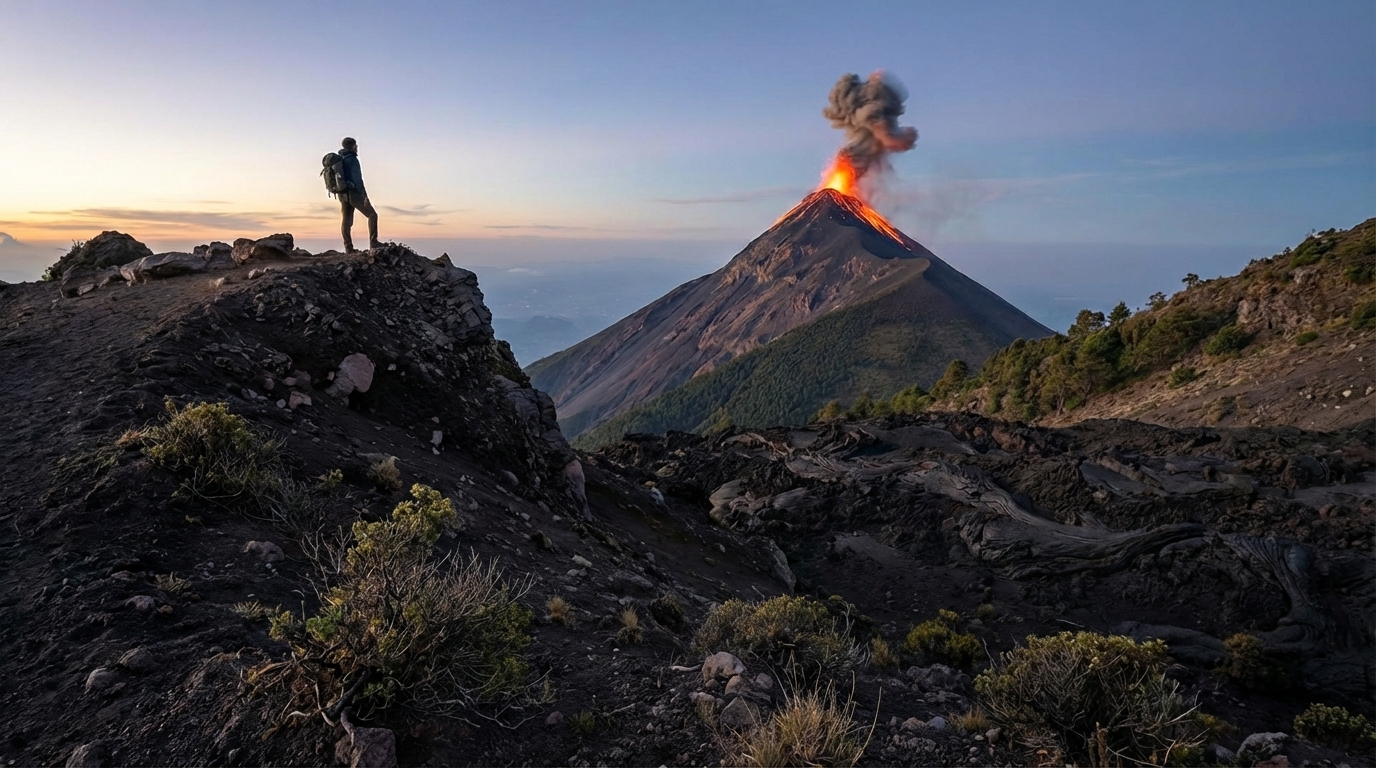
Weather is unpredictable here. But if you want to actually see explosions instead of a gray wall of fog, aim for dry season. That’s November to April.
January and February are the best bets. Clear skies. Crisp views. But—and this is a massive “but”—it is brutally cold. Bone-chilling, I-regret-everything cold.
If you go in the wet season (May to October), you might get soaked. Mudslides happen. The trail becomes a slip-n-slide. But it’s greener. Lush. Less crowded. Sometimes… the clouds clear at night and you get this insane inversion layer where peaks poke through like islands in a white ocean. Honestly? It’s a gamble. I’d say stick to dry season.
Acatenango Hike Difficulty: Elevation Gain and Fitness Requirements
Let’s not lie to ourselves. This hike kicks your butt.
You start around 2,400 meters and climb to nearly 4,000. That’s roughly 1,500 meters of gain in a short distance. The gradient is steep. Rude, even. It’s not technical—no ropes needed—but your lungs will scream. The air gets thin fast.
Can a normal person do it? Yeah. I’ve seen people in jeans and Converse make it (please don’t be that idiot). But if you haven’t hit the gym in three years, you’re gonna suffer. It’s 5-6 hours of lunges on shifting sand. Mental toughness is half the battle. When legs turn to jelly, just keep moving.
Hiring a Porter: The Best Money You Will Ever Spend
If you are reading this thinking, “I don’t know if I can carry 30lbs up a 45-degree wall,” stop worrying and hire a porter.
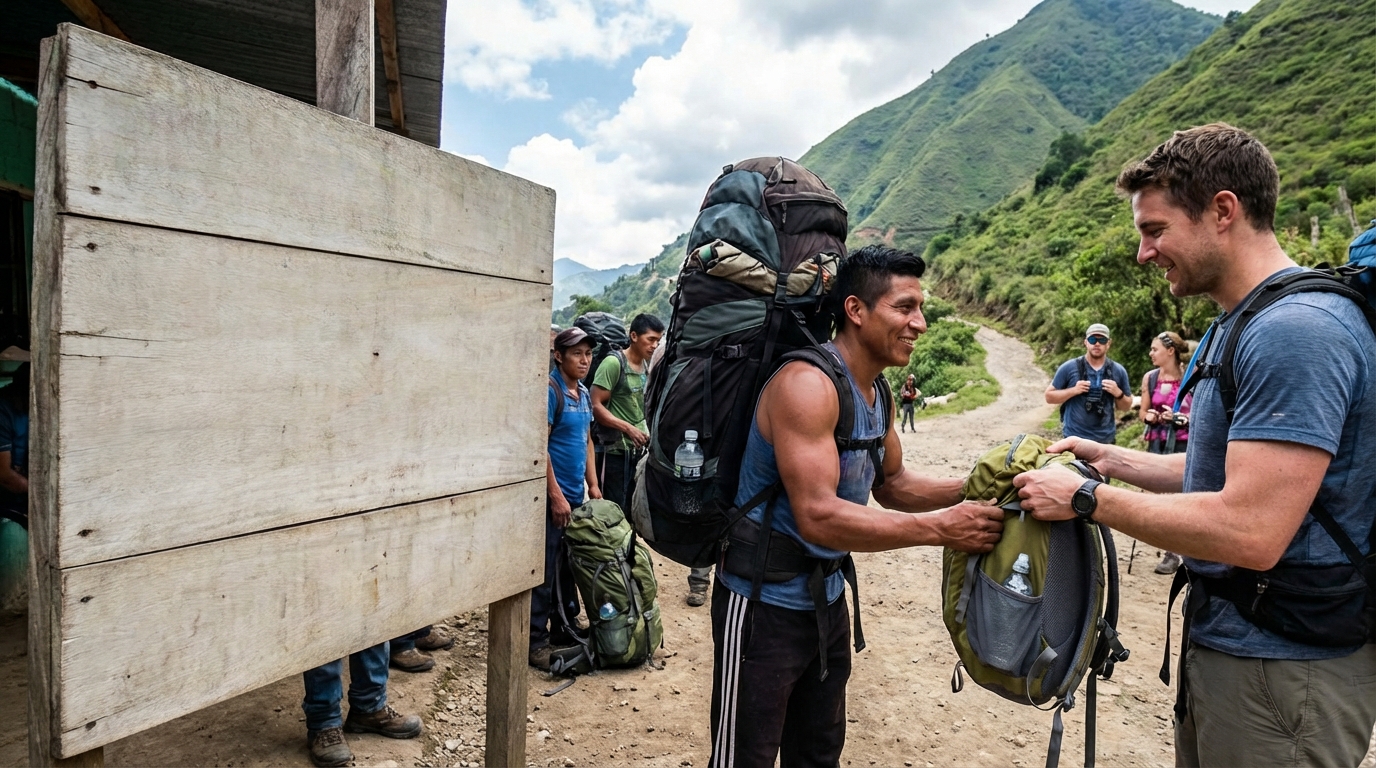
At the trailhead in La Soledad, there’s a local economy of guys with steel legs who carry your pack. Cost is usually Q200 ($25 USD) each way.
Do it. Seriously.
It’s ethical tourism—putting cash directly into local hands—and saves your knees for the way down. Watching these guys trot up with 50lbs of gear while you struggle with a water bottle is humbling. But it makes the hike actually enjoyable.
Guided Tour vs. Solo Hike: Safety, Logistics, and Costs
You can hike solo.
Should you?
Ehhhh. I wouldn’t.
Unless you are a mountaineer who loves hauling heavy camping gear up a steep slope, just book a tour. For like $50-$90 USD, they handle it. Tents. Bags. Food. Guides know the mountain, the weather, and have radios if things go sideways.
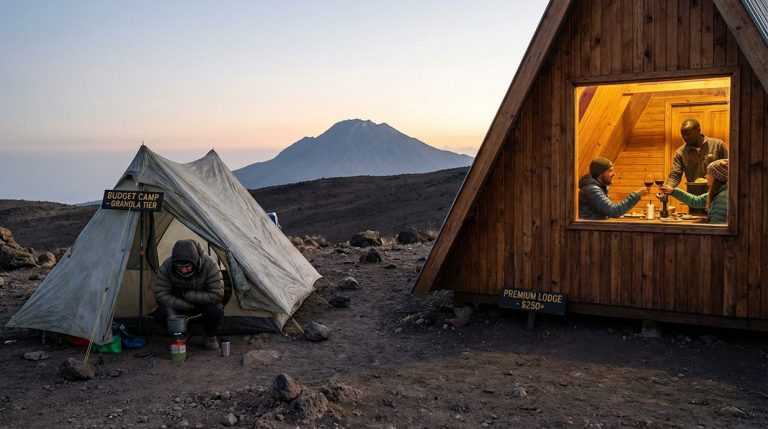
Plus, getting to La Soledad from Antigua is a pain without a shuttle. Outfits like Wicho & Charlie’s or OX Expeditions have base camps. This means no setting up tents in the wind. You crawl into a cabin. Worth it.
Solo hikers save money—entrance is only Q110 ($14)—but if you get hypothermia or lost in the fog… the savings won’t feel great.
Essential Packing List for Acatenango: Layers, Gear, and Snacks
Pack light. But pack warm. It’s a paradox.
Here’s what you actually need, ignore the catalog fluff:
- Boots with grip. Scree is loose. Sneakers = sliding backward constantly.
- 4 Liters of Water. Non-negotiable. 3L for drinking, 1L for guides to cook noodles. Heavy. Deal with it.
- Headlamp. Phone flashlights are useless here.
- LAYERS. Base, fleece, puffer, shell. Gloves and beanie are mandatory.
- A Buff. The trail is dust. You will blow black dirt out of your nose for days unless you cover your face.
- Snacks. Tour food is usually just… okay. Bring chocolate. Nuts. High-calorie trash. You’ll crave sugar.
- Toilet Paper. No bathrooms. Just nature (or a scary hole at camp).
The Ascent: What to Expect from the Trail to Base Camp
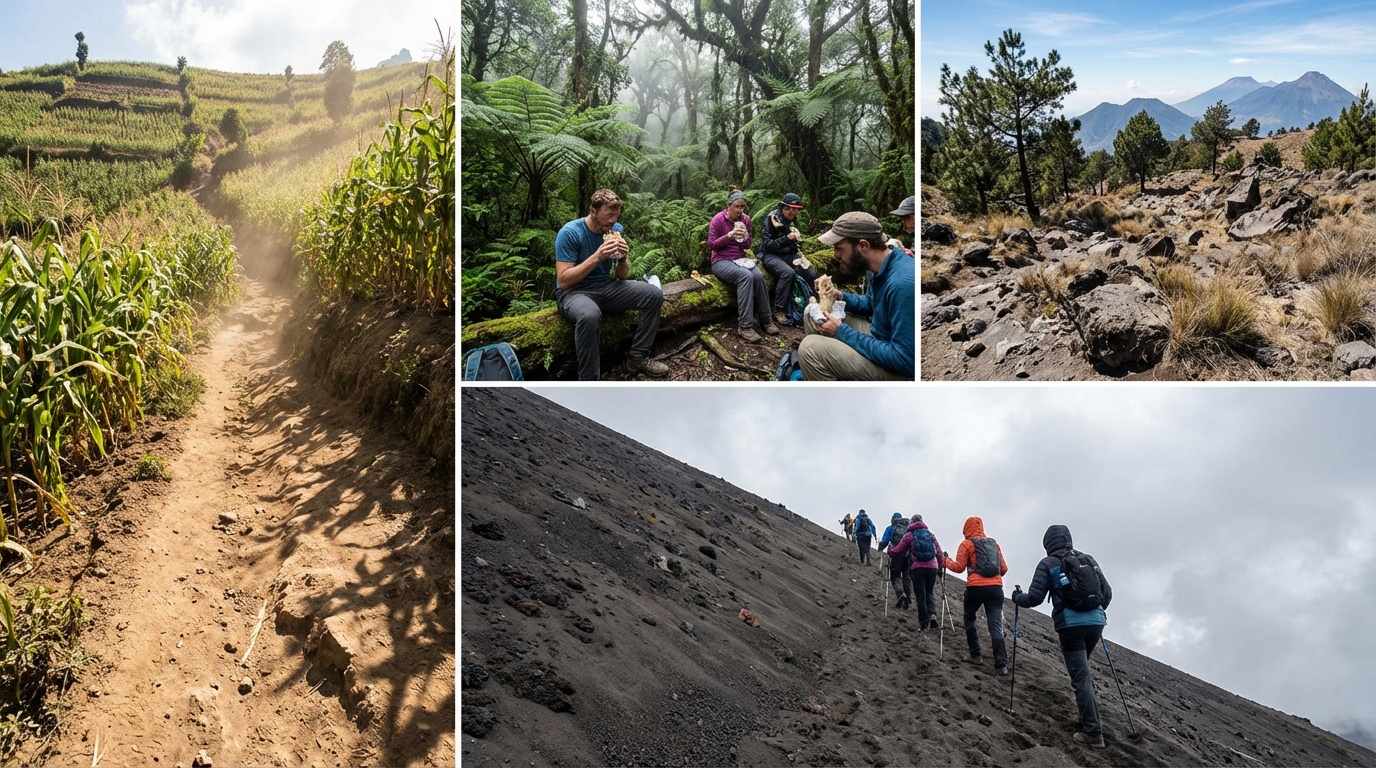
The hike breaks into zones. The changing landscape is part of the trip.
Zone 1: Farmland (The “False Hope” Phase).
Cornfields. Dusty, sunny, steep immediately. You question your fitness within 15 minutes.
Zone 2: Cloud Forest (The “Jurassic Park” Phase).
Suddenly, jungle. Giant trees, moss, shade. Cool and damp. Trail is solid dirt here, easier to grip. Listen for birds.
Zone 3: High Alpine (The “Moonscape” Phase).
Trees shrink. Disappear. Now hiking through pine and zacaton grass. Wind picks up. You see volcanoes in the distance.
Zone 4: The Scree (The “Are We There Yet?” Phase).
Last push. Volcanic sand. Annoying. Two steps up, slide one back.
You stop for lunch in the cloud forest. Usually a cold burrito. It tastes like the best meal of your life because you are starving.
Camping at 3,600 Meters: Watching Fuego Volcano Erupt at Night
Arrival at camp is spiritual. Drop the bag. Look up. BAM. Fuego is right there.
Camps sit on the side of Acatenango, facing Fuego. When sun drops, the show starts. Red lava fountains shooting up. The sound hits seconds later—a deep BOOM. Sounds like a jet engine taking off next to your ear.
Dinner around a fire (pasta, cocoa, maybe wine). Everyone is tired, dusty, happy. Heads up: sleeping is hard. Ground is cold, air is thin, and oh yeah, a volcano is exploding outside.
The 4 AM Summit Push: Catching Sunrise Over Central America
“Wake up! 4 AM!”
Guides screaming in the dark.
You don’t want to get up. It’s freezing. But you do. The summit push is the hardest part. Only an hour, but straight up deep, loose sand. Feels like climbing a dune in a blizzard. Wind whips your face. Can’t breathe.
Then you crest the rim.
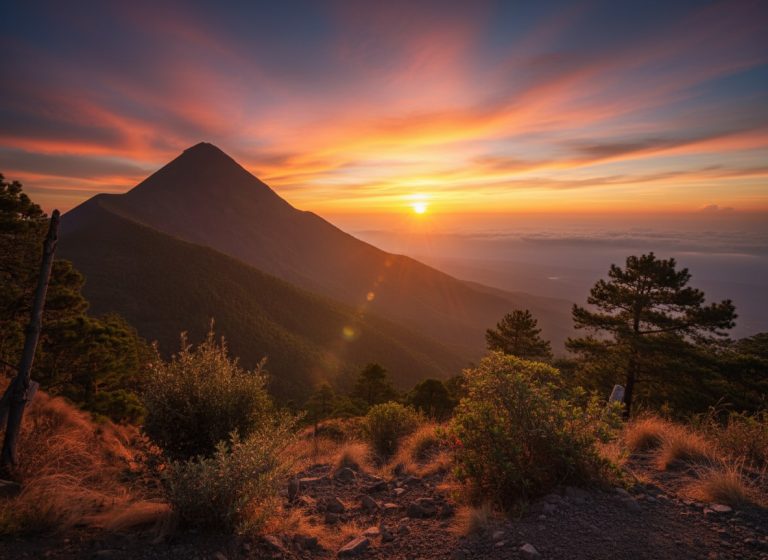
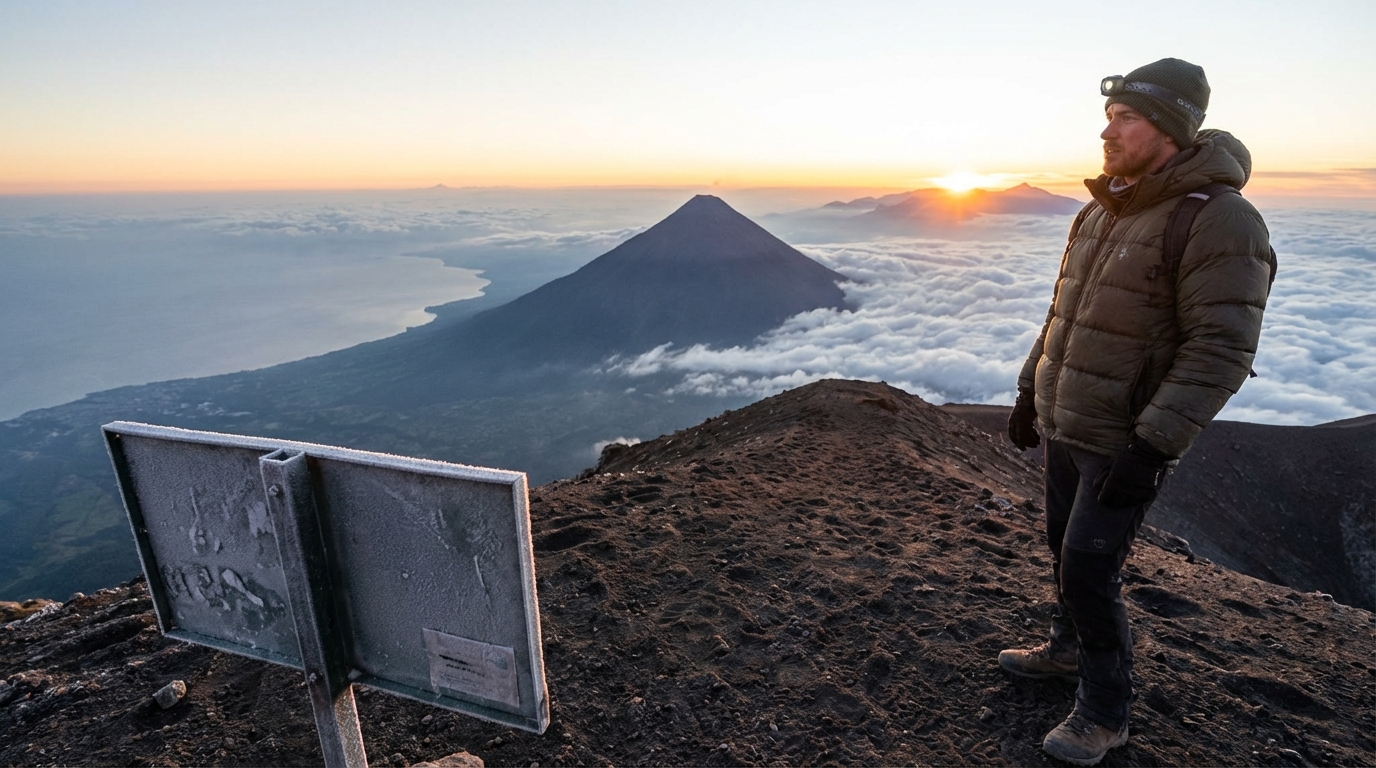
Sun breaks the horizon. A triangular shadow—Acatenango itself—stretches to the Pacific. You see the chain of volcanoes lining up. It’s the most “I’m the main character” moment you’ll ever have.
Optional Fuego Volcano Hike: Is the Extra Challenge Worth It?
At base camp on Day 1, guides offer an “add-on”. Walk onto Fuego.
Usually extra Q200 ($25).
Worth it?
If you have energy… yes.
But know this: it is brutal. You hike down from Acatenango, cross the ridge, hike up Fuego. Stand on the knife-edge, feel the heat. Dangerous. If activity is too high, they cancel.
After the thrill, you hike back. That means hiking up to Acatenango camp in the dark. It destroys people. I’ve seen grown men cry. Only do this if your legs feel fresh.
Safety Reality Check: The 2017 Tragedy
I need to get serious. Acatenango is a tourist attraction, not a theme park. It is a high-altitude mountain.
January 2017, six hikers died of hypothermia. Freak cold front. They weren’t ready for the temp drop. In Guatemala, “dry season” means “cold season.” Summit temps drop to -5°C (23°F).
Do not underestimate the cold. Cotton kills when wet. If guides say weather is too dangerous, listen.
How to Prevent Altitude Sickness on Acatenango
Altitude sickness is weird. Hits fit people, spares couch potatoes sometimes.
Symptoms: Headache, nausea, dizziness.
Prevention:
- Acclimatize. Don’t fly in and hike the next day. Spend 2 days in Antigua (1,500m).
- Hydrate. Drink more than you think.
- Diamox. Acetazolamide helps. Ask a doctor.
- Slow down. Not a race. Heart pounding? Stop.
If you vomit or feel confused, go down. Immediately. Guides have oxygen usually, but descent is the only cure.
Acatenango vs. Pacaya: Which Volcano is For You?
You see ads for both. Here is the difference:
- Pacaya: Fun, half-day. Roast marshmallows on vents. Horses take you up. Family-friendly, back for lunch.
- Acatenango: Grueling, two-day expedition. No marshmallows, just suffering and glory.
Want a nice photo? Pacaya. Want a life-changing experience you earn? Acatenango.
Photography Tips for Capturing Lava and Night Skies
Want that shot for the ‘Gram? You need a tripod.
Handheld won’t work.
- Settings: Open aperture wide (f/2.8 or lower). ISO 1600-3200. Exposure: 10-20 seconds for stars.
- For Lava: Lava is bright. 20-second exposure might blow it out white. Try shorter (2-5 secs) for red detail.
- Battery Trick: Cold drains batteries. Sleep with spares in your sleeping bag, keep them in your jacket hiking.
- Lens: Wide angle (16-24mm) captures volcano + stars.
Where to Stay in Antigua Before and After Your Trek
You need a good bed before (rest) and after (recover).
- Budget: Yellow House or Adra Hostel. Good vibes. Tropicana Hostel is the party spot, runs their own tour.
- Mid-Range: Hotel Mesón de María. Charming, quiet.
- Splurge: Casa Santo Domingo. Old convent. Museums, spa, candles. If you can afford it, soaking in their jacuzzi after the hike is heaven.
Book a massage for the day you get back. You’ll thank me later.